New York City’s Chinatown, now a thriving neighborhood, was formerly a gang-controlled slum rife with disease and violence. The Five Points neighborhood, found at the intersection of five city streets, was built over Collect Pond, a small body of water that was incredibly polluted and eventually filled. The city had intended to build over it, but instead had created something of a swamp in Lower Manhattan’s east side. This created squalid, mosquito-ridden conditions, and many believe it to be the cause of New York City’s devastating Cholera outbreak in 1832.
The botched effort to fill the pond turned the Five Points into one of the city’s most undesirable neighborhoods. As a result, it became the only place where many new Irish and Italian immigrants could afford to live. For many of the Irish immigrants, living in the Five Points was their only option, not only due to their lack of wealth and the struggle to find work in the city, but because of growing anti-Irish sentiment. Many New Yorkers believed that the Irish were taking their jobs and that they wanted to spread Catholicism to America, taking away their freedom. This hatred manifested in many ways, leading to terrible conditions for the Irish, not only in how they lived, but also in how they were treated in across the nation.
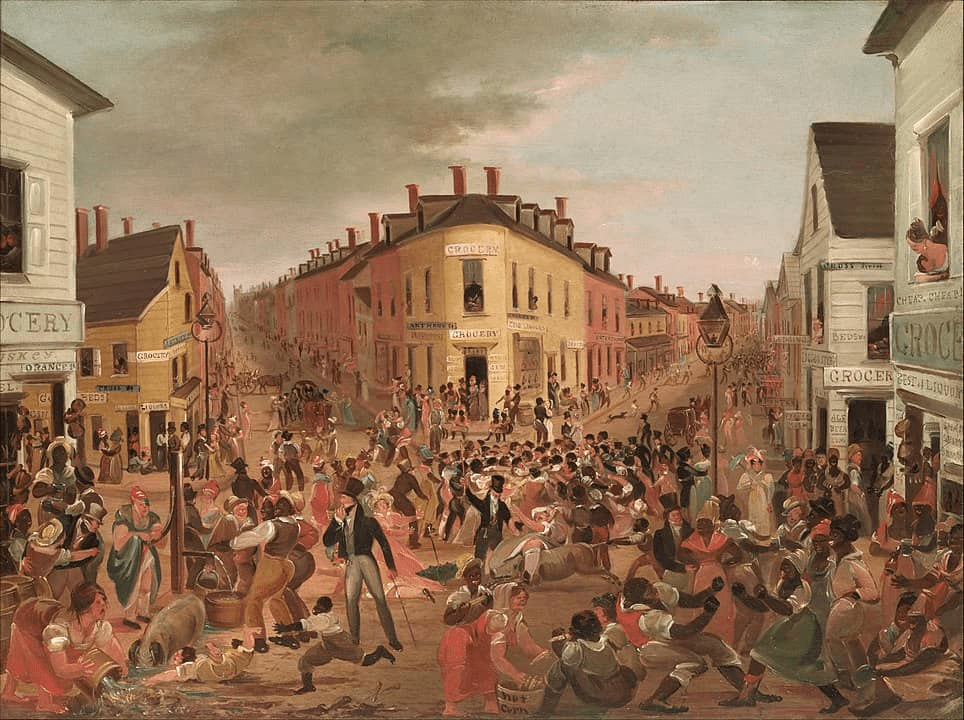
Five Points painting, 1827
These Irish immigrants began to clash with the city’s growing freed African American population, who were also often very poor and working some of the lowest-income jobs. There was often strife between these groups, as they were essentially fighting for the lowest rung on the city’s social ladder–for the most low-paying and unskilled jobs, and the cheapest housing. To house these low-income groups, the city built tenements, buildings that housed the most people possible in incredibly close spaces. Entire families would live in one-room apartments, with bathrooms and kitchens shared by many. As these apartments were built atop the marshy, swamplike land where collect pond once was, many of them lacked strong foundations and structural integrity.
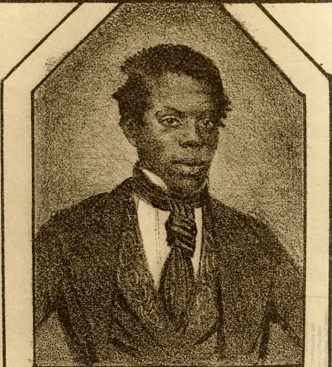
While conflict was common in Five Points, it was also home to a great deal of cultural exchange. Tap dancing was invented in the neighborhood due to the fusion between Irish jig dancing and Juba dancing, which originated in Africa and was developed by enslaved Africans in the West Indies. The most famous tap dancer of this era, known as the father of tap, was Master Juba. He was a free Black man who first performed in minstrel shows and created what we now know to be tap dance. He was incredibly famous and one of the first Black dancers to tour with a white minstrel group.
 History Unfiltered
Leave a comment