David Drake, from Edgefield South Carolina, was a potter and a poet.
In the early 1800s, David Drake was born an enslaved man and began work in Edgefield, a district of South Carolina and the center of the states stoneware production. The majority of the enslaved population worked as potters, producing ceramic stoneware. The majority of these enslaved potters will never be known or recognized by name, because this work was impersonal. Though they were artists, they were not permitted to sign their work—in fact, they were not even permitted to be literate, to know how to write their own names. However, Dave the potter defied these rule, signing many of his pots and even writing poetry on some of them.
While it is unknown how exactly Dave learned to read and write, it is possible he learned some of it while working at the Edgefield Hive, a newspaper owned by the slaveholders who enslaved Dave.
David’s writing and inscribing was an act of resistance. Though anti-literacy laws for enslaved people were already harsh in South Carolina, they became even more stringent in the 1830s after Nat Turner’s Rebellion. Enslaved people who were caught reading or writing risked harsh punishments—beatings, torture, or even amputation of fingers.
In the 1830s, Dave lost one of his legs in a railroad accident, and though he now required aid to operate the pottery wheel, he continued to create.
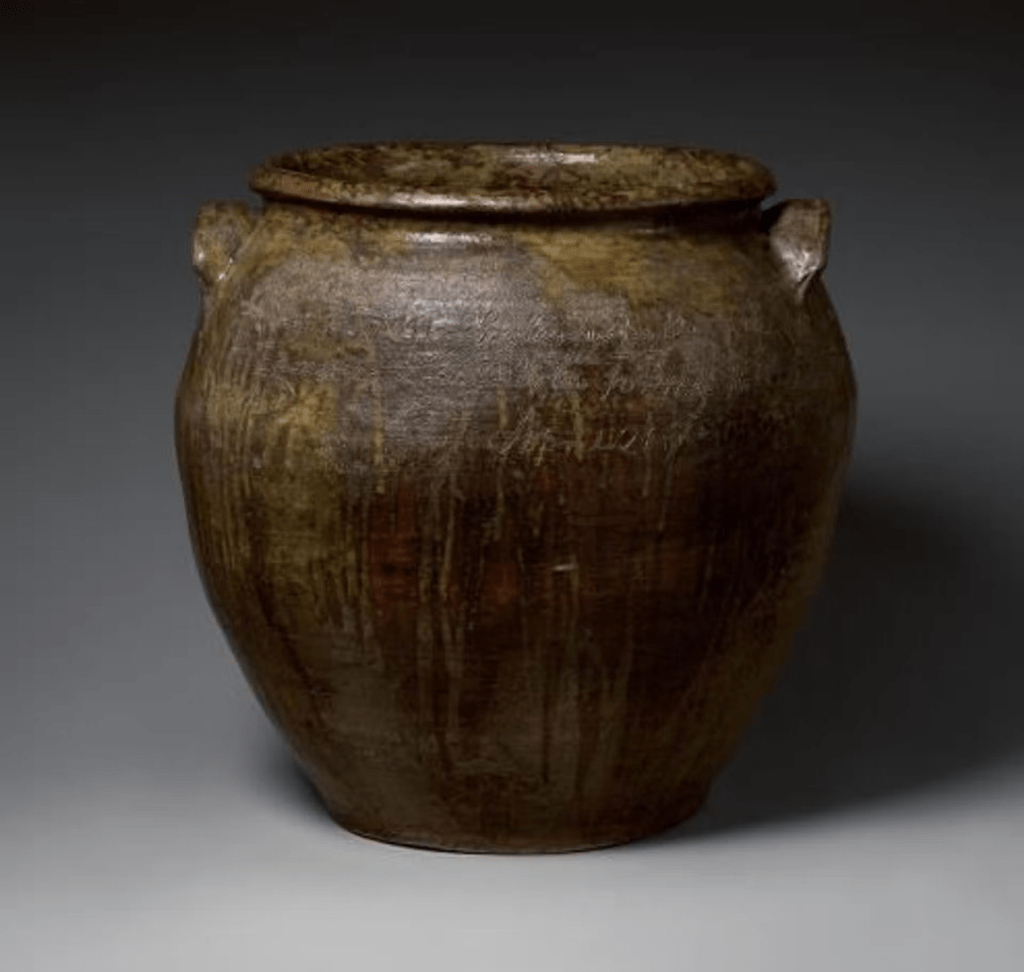
One of Dave’s pots from 1858: “this jar is to Mr Segler who keeps the bar in orangeburg / for Mr Edwards a Gentle man — who formly kept / Mr thos bacons horses / April 21 1858”
By the 1850s, Dave was viewed as a master potter, and was well respected in his community, and even by his slaveholders. Following his emancipation, Dave changed his name officially to David Drake, and he continued to create pots. It is estimated that David created over 40,000 pots in his lifetime, but only around 300 have been recovered.
 History Unfiltered
Leave a comment