This past weekend, New York City’s Pier 25 experienced a blast from the past when the Seneca Chief came to visit. A replica of the first ship to ever sail the entirety of the Erie Canal, the Seneca Chief was built over five years to celebrate the bicentennial of the Erie Canal’s creation.
In 1810, Dewitt Clinton, who’d formerly been mayor and Lieutenant Governor of New York, became a member of the Erie Canal commission. The project’s goal was to connect Lake Erie with the Atlantic Ocean, via the Hudson. Many New Yorkers did not have faith in this project, from regular citizens to other political figures. Newspapers called it “Clinton’s Folly”, believing it to be a hopeless endeavor and a waste of money. Fifteen years later, Clinton proved them all wrong, as the Erie Canal opened in full, and he took a trip along its length in the original Seneca Chief, bringing with him two casks of water from Lake Erie to empty in the Hudson in a Wedding of the Waters ceremony, celebrating the connection between East and West. The canal was a great success. Trade and travel boomed, and New York could now export its manufactured goods Westward at a much faster rate.
The ship made was a near-exact replica, and its interior reflects its purpose: both honoring the ship’s original design with a working iron stove and bunk beds hanging from the low ceiling, and its role as a museum ship with plaques and images from the design process.
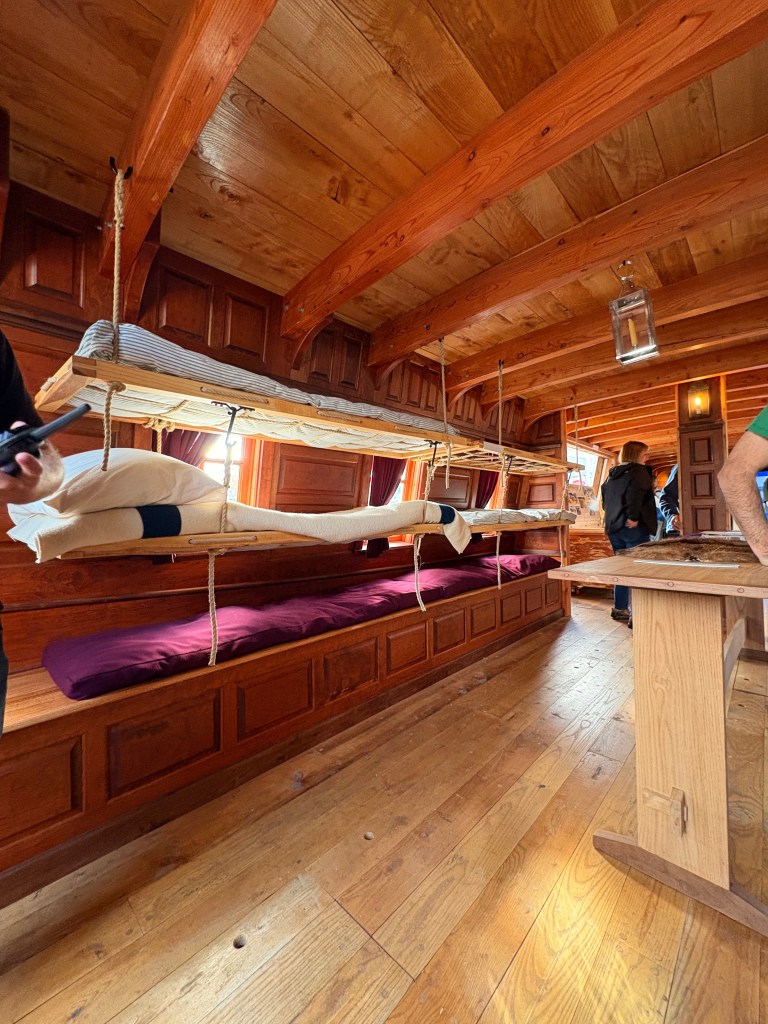
To celebrate the bicentennial, the Seneca Chief traveled for about four weeks along the canal, visiting canalside communities and making landing in New York on October 26th, 2025—exactly 200 years after Clinton first performed the Wedding of the Waters. After this journey, the Seneca Chief will spend the winter in a shipyard in Buffalo as plans are made to settle it in an accessible location where people can continue to visit her.
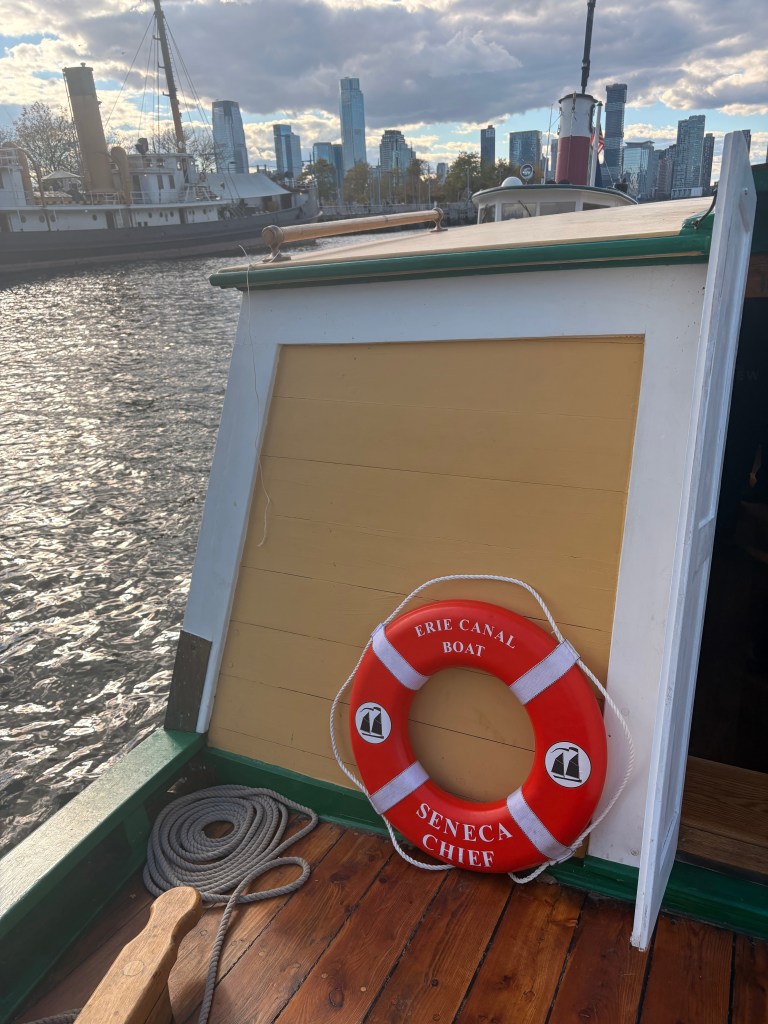
I had the privilege of attending this year’s Wedding of the Waters Ceremony, where I heard from members of the Buffalo Maritime Society and New York State Governor Kathy Hochul, who performed the Wedding of the Waters ceremony, pouring water from both Lake Erie and the Hudson into the pot of a White Pine Tree. The White Pine was watered and planted to honor the Iroquois Confederacy, as it is an Iroquoian symbol of peace. Hearing the historians and designers who brought this project together speak, I was deeply inspired. As I learned, this work is about uplifting the communities that have relied on the canal, remembering the Native Americans who were displaced during its construction, and continuing to educate Americans about the historic infrastructure that facilitates their livelihoods today.
 History Unfiltered
Leave a comment